











You are walking along a tiled floor when you notice that your feet are landing on alternate tiles. Instead of stepping wherever your next foot naturally falls, you begin following a pattern: one tile, skip the next, step on the third. Sometimes you avoid the lines between tiles or try to keep both feet within a particular sequence.You may not even realise when you start doing it. For some people, the habit continues until the floor pattern ends. For others, it is simply a small game they play while walking through a corridor, shopping centre or railway station.This seemingly insignificant behaviour may be connected to the human tendency to notice patterns, create order and turn repetitive movements into small challenges. It does not necessarily indicate anything unusual about a person’s personality.
Why does the brain enjoy finding patterns in ordinary things?
Humans are naturally good at recognising patterns. We notice repetition, symmetry and order in objects around us, sometimes even when we are not deliberately looking for them. A 2012 study examined how people create and perceive visual patterns. In a series of experiments, participants were asked to arrange visual elements into patterns.The researchers found that people spontaneously created highly ordered arrangements and generally preferred ordered patterns over random ones. The study suggests that the mind readily organises visual information into familiar structures.This offers one possible explanation for why a tiled floor can become more than just a surface to walk on. Its repeated squares, lines and alternating colours provide an easy structure for the mind to follow. Skipping every alternate tile turns that visual arrangement into a simple movement-based pattern.However, the study examined how people organise and perceive visual patterns. It did not test whether people who step on alternate tiles have a stronger preference for patterns.
Why can walking become a little game?
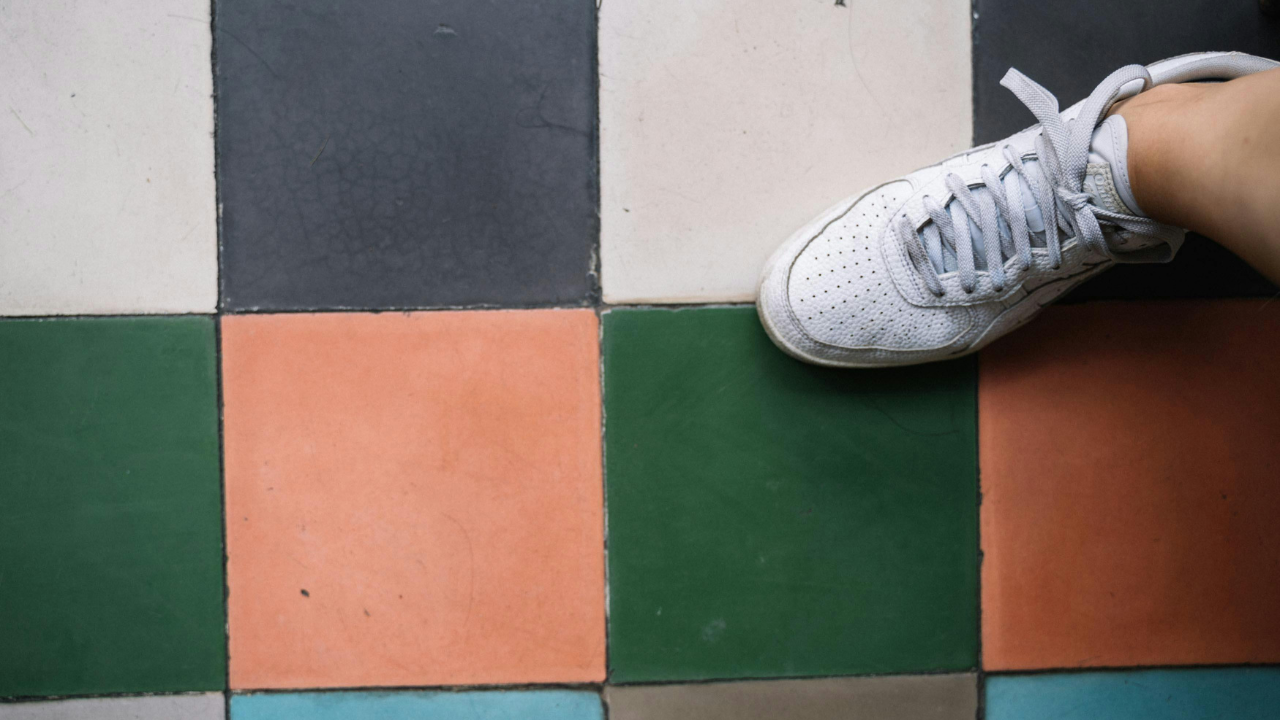
Photo: Canva
A familiar route can sometimes become an opportunity to create a small challenge. A person may decide to step only on dark tiles, avoid the joints between slabs or follow a repeating sequence without interrupting their stride. The activity can make an otherwise routine walk feel more engaging. It gives the person a simple rule to follow and a small goal to complete.Research on how people respond to floor patterns also shows that visual arrangements can influence the experience of walking. In a 2021 study titled ‘Walking on Visual Illusions,’ researchers from the University of Bristol and other institutions observed participants walking across floors printed with different visual patterns.Participants found the patterns interesting, with some describing them as playful or gentle. Others found certain designs uncomfortable to walk on and reported feeling less stable. The study focused on how visual floor designs affect walking experience, rather than why people deliberately step on alternate tiles. Still, it shows that the patterns beneath our feet can influence how we experience an ordinary walk.
When is it just a harmless habit?
For many people, stepping on alternate tiles is simply a passing activity. They may do it without thinking, stop when the floor changes or forget about it a few minutes later. Similar repetitive routines are also seen during childhood. A 2002 study examined rituals, habits and magical beliefs in 31 children.The researchers found associations between children’s ritualistic behaviours and their beliefs about magic and wishes. The study described these behaviours as part of the range of repetitive habits that can occur during typical development.But there is an important contrast between enjoying a pattern and feeling compelled to follow it. If someone deliberately avoids a particular tile because it makes walking more entertaining, the behaviour is unlikely to be concerning. If they feel intense anxiety when they break the sequence, believe something bad will happen if they step on the wrong tile, or find themselves unable to stop repeating the action, the experience is different.Repetitive movements alone do not establish obsessive-compulsive disorder (OCD). What matters is whether the behaviour causes significant distress, takes up considerable time or interferes with everyday activities.
Does stepping on alternate tiles say something about your personality?
Not necessarily. There is no established evidence that people who follow floor patterns are more creative, organised or detail-oriented than others. For some, it may be a playful way to pass the time. For others, it may simply be an automatic habit they picked up during childhood and continued into adulthood.The next time you find yourself skipping every alternate tile, it may just be your mind turning an ordinary walk into a small pattern-following game. The habit becomes more meaningful only when it stops being a choice and starts feeling like something you must do.