








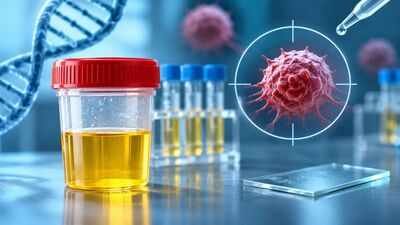
NEW DELHI: With an estimated 15.6 lakh new cancer cases and 8.7 lakh deaths in India in 2024, a new study points to a possible way of identifying people at higher risk of developing cancer even before symptoms appear: a urine biomarker.The research, published in Cancer Epidemiology, Biomarkers & Prevention last week, found that the profile of certain molecules in urine could help predict the risk of developing multiple cancers over five years.The study followed healthy adults enrolled in the Lifelines population cohort in the Netherlands. Researchers analysed 24-hour urine samples from all 827 participants who developed cancer within five years and a random sample of 4,609 who did not. The results were scaled to estimate risk across a cohort of 1,24,436 adults.Researchers from Lund University, the University of Liverpool, Dana-Farber Cancer Institute and Elypta measured three chondroitin sulphate disaccharides in urine using mass spectrometry. They combined these measurements into a GAGome score and assessed its predictive value both independently and alongside 13 established risk factors.The five-year risk of developing cancer was 0.18% in the low-risk group, 2.3% in the intermediate-risk group, 7.6% in the high-risk group and 32% in the very-high-risk group. A one standard deviation increase in the score was associated with a 66% higher risk of cancer, even after accounting for established risk factors.The researchers estimated that screening people classified as high risk could identify 54% of cancers, including 54% of in-situ carcinomas, with a 17% false-positive rate.“The association was independent of established risk factors and consistent across cancer stages, which makes this dynamic biological marker worth testing prospectively,” said John Field, professor of molecular oncology at the University of Liverpool and a co-author of the study.“Urinary GAG profiling offers a promising, non-invasive approach to identifying people at increased risk of multiple cancers. However, findings from the Dutch population cannot be directly extrapolated to India because of differences in genetic backgrounds, risk factors and cancer patterns. Large, multicentric studies in Indian populations are needed to establish its accuracy and cost-effectiveness. The test should be considered for wider screening only if it demonstrates improved early diagnosis and reduced cancer mortality,” said Dr Abhishek Shankar, associate professor of radiation oncology at AIIMS.
Share your thoughts in the comments
Be respectful · TOI community guidelines
The findings could pave the way for more personalised cancer risk assessment, but the urine biomarker is not a diagnostic test. Its accuracy and clinical usefulness will need to be established through further prospective studies, particularly in Indian populations, before it can be considered for wider screening.