






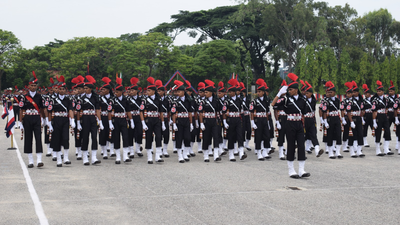
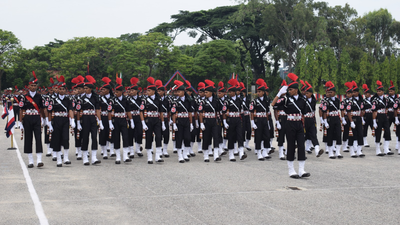
With Diwali just days away, the Union Cabinet has given nearly 20,000 Agniveers a reason to smile, as they now have the opportunity to serve for another two years. The Cabinet has made the change just as the initial batch of 24,400 Agniveers was nearing the end of its four-year service term, with as many as 75% of the batch, or 18,300 personnel, set to leave the three armed forces. The first batch of Agniveers from the Navy was set to leave on November 21, the first Air Force batch on December 25 and the Army’s batch on December 31.Under the original scheme, those not selected for permanent service would return to civilian life with a Seva Nidhi package, made up of their own contributions and a 30% contribution from the government. The idea was to lower the average age of the armed forces, build a younger fighting force and reduce long-term salary and pension liabilities.
What is the Agnipath scheme?
The Agnipath scheme was announced on June 14, 2022, with recruitment beginning later that year. It is open to men and women between 17.5 and 21 years of age for posts below the officer cadre in the Army, Navy and Air Force, with recruitment held twice a year. After widespread protests, the government raised the upper age limit to 23, but only for the 2022 cycle due to the pause in recruitment during the Covid-19 pandemic.Agniveers serve for four years, which includes about six months of training followed by three and a half years of actual service. At the end of the tenure, up to 25% of the top performers of a batch were to be absorbed into the permanent cadre, while the remainder would not be eligible for a pension and would leave with a lump sum of around Rs 11 lakh. The government had planned to recruit between 45,000 and 50,000 personnel every year, starting with 46,000 in the first year.
The need for Agnipath
At the time of the scheme’s implementation, defence personnel expenditure had increased over the previous decade, with the combined share of pay, allowances and pensions rising to as much as 55% of the defence ministry’s expenditure. Meanwhile, the share allocated to equipment acquisition and maintenance had declined by 4%, while research and development accounted for only 3-4%. In 2022-23, pay, allowances and pensions totalled Rs 2,87,040 crore, accounting for 79% of the ministry’s revenue expenditure. The rising pension burden was attributed to salary revisions and the implementation of the One Rank One Pension (OROP) scheme, according to a Delhi-based think tank.Another reason for the recruitment scheme was to create a younger military workforce. The defence ministry estimated that it could bring down the armed forces’ average age from 32 years to 24-26 years. This was in line with recommendations from several expert committees advocating a younger force to meet evolving security challenges. A government comparison of the armed forces of the US, UK, France, Israel, Russia and China placed their average age at around 26-27 years, with engagement periods of two to four years and training lasting three to six months.
Agnipath under fire
The announcement of the scheme set off protests in several states, with defence job aspirants objecting to the four-year tenure and the limited scope for permanent recruitment. The lack of long-term job security, the upper age limit of 21 and the recruitment delays during the Covid-19 pandemic added to the discontent among aspirants. The agitation turned violent in many states, with trains and buses set on fire, highways blocked and public property damaged.The protests soon became a political confrontation as well, with the Congress and several regional parties demanding that the scheme be withdrawn, questioning its effect on military careers, operational readiness, cohesion and recruitment. In response to the agitation, the Centre raised the upper age limit to 23 for the 2022 recruitment cycle as a one-time relaxation and announced a 10% reservation for former Agniveers in the central armed police forces and Assam Rifles. Several BJP-ruled states also announced employment preferences for them in their police services, while many private firms said they were looking forward to inducting Agniveers after they completed their four-year term.
How the new Agnipath pathway differs
The provision to retain 25% of Agniveers as regular soldiers continues. The remaining 75% will now be offered a second engagement of two years, a decision that follows the armed forces’ recommendations after they assessed how the scheme performed in its first four years. At the end of this period, all Agniveers will be offered the chance to enrol as regular soldiers, subject to their willingness and the selection criteria laid down by the services. The extra two years give them more experience before they are considered, but the government has made clear that absorption will not be automatic.Agniveers from the larger pool who choose to continue will be given seniority, though it will be lower than that of the 25% chosen on merit. The scheme itself stays, and its recruitment structure is unchanged. The change is to the exit pathway for the 75%.The second engagement carries higher pay and benefits. According to the briefing by Chief of Defence Staff General NS Raja Subramani, remuneration will be Rs 43,500 in the first year of the extended period and Rs 47,500 in the second. The government’s contribution to the Seva Nidhi package will also go up, with the government increasing its contribution from 30% to 70% of the amount contributed by the individual service member during this extended engagement period, along with other seniority-related benefits.
What the review found
The armed forces’ assessment, the CDS stated, found that Agniveers had performed well in physical fitness, motivation, discipline, technological adaptability and skills. The review also pointed to a wider recruitment footprint across the country, with a more transparent and standardised selection process. The order of selection has changed as well, with the written test now held before the physical test, and more avenues will open for women Agniveers. General Subramani said around 25-30% of Agniveers are already deployed in operational areas, underlining that they are performing active military duties.The decision comes against the backdrop of a continuing debate over how the scheme affects unit cohesion and the availability of trained personnel. The government maintains that the revised arrangement will not affect unit cohesion and that the armed forces’ recommendations were based on organisational requirements and operational efficiency.The change addresses one of the principal concerns about the original model, which gave regular service to only a quarter of each batch and left most recruits with little chance of a longer career. The remaining Agniveers now have two more years and another shot at permanent enrolment.