







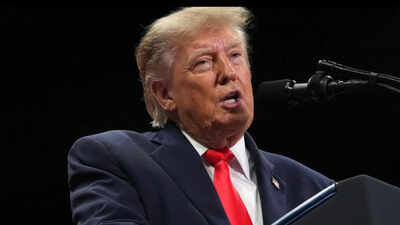
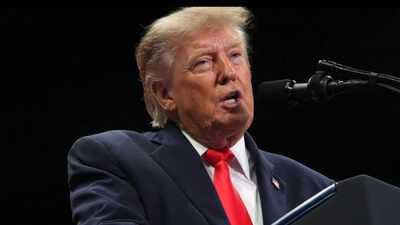
The Donald Trump administration has announced more than $15 billion in payments, loans and other support for US farmers in the weeks before the midterm elections, seeking to ease the impact of soaring fuel and fertiliser costs. The measures, announced by the US Department of Agriculture (USDA), come as farmers struggle with higher expenses linked largely to Trump’s tariffs and the war in Iran. The move is also aimed at supporting agricultural producers in rural states where traditionally Republican seats are becoming competitive.Trump is scheduled to visit Iowa and Kansas on Sunday, two days before the election, as he steps up his focus on rural voters. However, it remains unclear whether the financial assistance will encourage more farmers and other rural voters to turn out in support of Republican candidates.More than half of the announced $15 billion package will go towards an $8 billion one-time payment programme for farmers facing a sharp rise in diesel prices. The USDA said it would release further details this month. However, it has not specified when farmers will receive the money.The package also includes at least $5 billion in guaranteed loans for ranchers and fishermen. Another $1.8 billion will go to producers and landowners enrolled in conservation programmes. The USDA has allocated $573 million for fertiliser manufacturing projects and $57 million to expand meat processing capacity. Specialty crop producers will receive $86.6 million in grants for innovative projects.Separately, the department plans to purchase up to $472.5 million worth of agricultural commodities to support producers and supply charitable programmes.These initiatives come in addition to $13.8 billion in safety net payments planned for eligible farmers for the 2025 crop year. The payments are intended to cover financial shortfalls for producers of key crops, including corn, soybeans, wheat and rice.The USDA has also announced measures to expand sales of diesel normally restricted to off-road use, improve transparency in cattle sale data and strengthen wolf management policies to protect livestock.Farmers face rising costsThe financial assistance comes after a difficult year for US farmers, who have faced rising fuel and fertiliser costs, alongside higher expenses for agricultural equipment due to tariffs imposed last year. The trade war with China also led to a near boycott of US agricultural goods.Diesel prices have been a particular concern. On Friday, the average price stood at $6.32 per gallon, slightly below its September peak but 70% higher than a year earlier, according to motor club AAA. Filling a 100-gallon tank now costs farmers around $260 more than it did a year ago.Gregg Ibendahl, a farm management specialist at Kansas State University, said the payments could more than compensate for the increase in fuel costs and help farmers deal with expensive fertiliser.He said: “That input side risk, I think, is the thing that really has hurt farmers this year, as well as the fact that there has been a lot more uncertainty about what’s going to happen in the world,”Ibendahl expects the additional payments to help farmers who might otherwise fail to make a profit this year. However, he cautioned that temporary government assistance would not address the wider problems driving up production costs.“It’s hard to go to your lender in the next spring and say, ‘OK, well, we’re looking pretty good this year, but it’s all because of these extra temporary government payments, so how much can you make me a loan (for) next year for my crop?’” he said.Alexandra Middlewood, an associate professor of political science at Wichita State University, said farmers have expressed mixed reactions to the assistance. While many welcome the support that could help keep their businesses afloat, some view the programmes as one-time bailouts rather than a long-term solution.Rural voters and the midterm electionsThe agricultural sector has traditionally been an important source of support for Trump, particularly in rural states. However, some of his policies have also affected farmers and businesses dependent on the agricultural economy.Michael Smith, a political science professor at Emporia State University, said immigration deportations have threatened the agricultural labour force. Cuts to foreign aid and food assistance programmes such as SNAP have also affected the market for agricultural products.“Some people who admire Trump really just admire the person, the man,” he said. “But it doesn’t mean they necessarily like his policies. Well, Trump himself isn’t on the ballot this year. His policies are.”Middlewood said the cost of living and access to healthcare remain major concerns among rural voters. She added that there is a perception that the administration has not done enough to address these issues, despite Trump’s claims at campaign rallies about a booming economy.She does not expect dissatisfied rural voters in Kansas to shift towards the Democratic Party, given the state’s long-standing Republican leanings. However, some could choose not to vote or support independent candidates, potentially affecting Republican prospects.“Independent voters make or break elections,” she said. “And so that’s really what it’s going to come down to this year is those independent voters and who they’re breaking for.”