

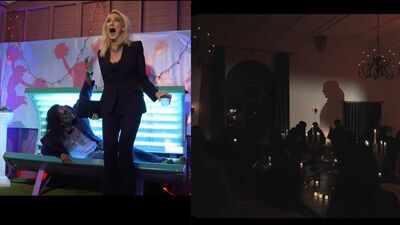
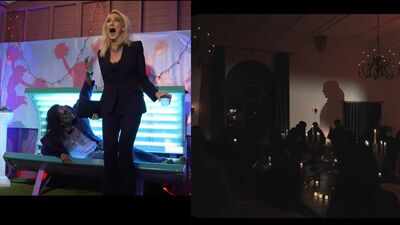
Two friends who opened a haunted house in a Denver shopping complex in 2002 with their own money have turned it into a multimillion-dollar entertainment business over the past 24 years. Chris Stafford and Warren Conard started the attraction in Colorado, charging visitors around $15 per ticket. By 2026, their company, Thirteenth Floor Entertainment Group, had expanded to 18 seasonal Halloween attractions across the United States, paying around 4,500 workers during the 2025 Halloween season.The business has come a long way from its early days, when the two friends had limited money and had to find inexpensive ways to create frightening experiences. Today, the company operates haunted houses in several American cities, alongside escape rooms, axe-throwing venues and other entertainment attractions. During the 2025 Halloween season alone, it paid around 4,500 workers.Stafford, the company’s CEO and founding partner, recently spoke to People magazine about how the business began. His interest in haunted houses developed long before he entered the business world. As a teenager growing up in upstate New York, he was invited by a friend to help frighten visitors at a haunted house operated by the friend’s family.He was just 15 at the time, but the experience stayed with him. Stafford continued working at the attraction during Halloween and met Conard there. The two became friends and discovered that they shared an interest in creating frightening experiences for visitors. They even discussed starting a similar business together, although neither was in a position to pursue the idea immediately.
How first haunted house started
After finishing school, Stafford moved to Colorado for college and eventually began working in banking. Over the years, he built a career, got married and started a family. Conard, meanwhile, went into marketing.Their earlier business idea resurfaced in 2001 when Stafford contacted Conard to find out whether he was still interested. Within two months, Conard identified a property in a Denver strip mall that could be used for a haunted house.They inspected the space and decided to proceed. The attraction opened in 2002, with tickets priced at approximately $15. Both men continued their regular jobs and used their own funds to keep the business running.Their early efforts also involved finding practical alternatives to expensive equipment. For example, they wanted visitors to hear a chainsaw, a sound commonly associated with haunted houses. But using an actual chainsaw inside the building was difficult, so they installed speakers to produce the noise instead.The sound frightened visitors enough to send some towards the exit. Recalling the experience, Stafford told People, “It was terrifying.”The attraction gradually developed into a serious business opportunity. Stafford began thinking about leaving banking, although the decision involved considerable financial uncertainty. His job provided a regular income, employment benefits and a work-life balance he enjoyed.The 2008 financial crisis became an important factor in his decision. After spending years considering the move, Stafford finally left banking in 2010 to focus entirely on the haunted-house business.
18 Halloween properties across the US
The company subsequently moved beyond its first Denver attraction and developed a much wider entertainment business. By 2026, Thirteenth Floor Entertainment Group had 18 seasonal Halloween properties, including attractions in Chicago, Denver and Houston.Its portfolio also includes experiences that are not centred entirely on Halloween. One example is Otherworld Philadelphia, a 40,000-square-foot immersive art installation created through a joint venture with Otherworld, a company based in Columbus, Ohio.Some of its Halloween attractions operate in buildings with unusual features. In San Antonio, Texas, visitors can experience an attraction inside a roughly 115-year-old building that includes a three-storey slide leading into the basement.The company has also operated Dark Harbor aboard the Queen Mary and collaborated with the Winchester Mystery House in San Jose, California.Managing so many attractions means the company must regularly introduce changes. According to Stafford, approximately 30% of an existing attraction is modified each year. Preparing an entirely new location can take around 12 months.However, he believes expensive effects are not always necessary to frighten visitors. Simple experiences, such as being unable to see what is happening nearby while hearing unfamiliar sounds, can be just as effective.
The 2025 Halloween season
The company’s growth has also created employment opportunities. Stafford said it has approximately 80 permanent, full-time employees, while the number increases to around 120 or 130 when part-time workers are included.The workforce becomes much larger during Halloween. According to Stafford, the company paid approximately 4,500 people during the 2025 season to help operate its attractions.Its next area of expansion is Christmas entertainment. In 2026, the company is entering that market for the first time, allowing it to offer attractions beyond its traditional Halloween season.Stafford’s two adult children have also become involved in the business. His son works part-time with the technology and construction team at the Denver location while continuing his education. His daughter previously worked as an actor at a haunted house before developing an interest in special-effects makeup.She later moved to Los Angeles to pursue acting and study film and special-effects makeup in Burbank. She also works on makeup at LA Haunted Hayride during weekends.For Stafford, the most rewarding part of the business is seeing people enjoy these experiences together. He believes visitors often remember the reactions of the friends and family members accompanying them as much as the scares themselves.“It’s not just about how you screamed in the haunted house,” he told People. “It’s about remembering how your friends screamed in the haunted house,” Stafford added.