



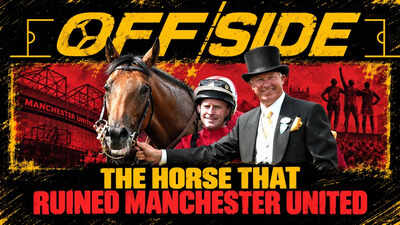
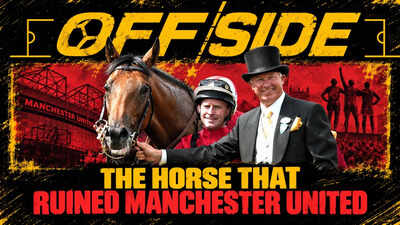
Hello and welcome to another edition of Offside.Manchester United fans must feel like they are stuck in several Franz Kafka novels at the same time. Overnight, their league-winning club has metamorphosed into a giant, useless insect; successive managers are perpetually put on trial for the sins of an institution whose real architects never appear in the dock, while supporters, players and even managers are stuck in a constant circle of doom as invisible people in the castle grin on and rub their monies.But how did one of the world’s most popular clubs go from a perennial winner to a mid-table banter club?The answer lies with the Glazers, obviously, but even for that, we have to go a little further back to examine – to borrow a line from Churchill – the beginning of the end of Man Utd’s downfall. But before that, a small story about how the club was saved.Those familiar with United lore know that the club was saved thanks to a dog named The Major. Back in 1901, Newton Heath, as Manchester United was known, faced bankruptcy when The Major, who also happened to be the club’s mascot and belonged to captain Harry Stafford, went missing. The canine ended up at a restaurant where he was fancied by John Henry Davies for his little daughter’s 12th birthday. The club captain refused to sell but later relented. But this chance meeting got John Henry Davies interested in the club’s fortunes, and he, along with other investors, saved it from bankruptcy and became its new chairman.And now United’s downfall, too, can be traced to another creature: a horse.Long before kings or presidents measured power by the size of their armies, nuclear arsenals or reverse tariffs, ancient Indian rulers had a rather ingenious way of establishing sovereignty: the Ashvamedha Yajna. A consecrated horse would be allowed to wander across kingdoms with the king’s warriors, and anyone who stopped said horse was challenging the king’s power and claim to the land.
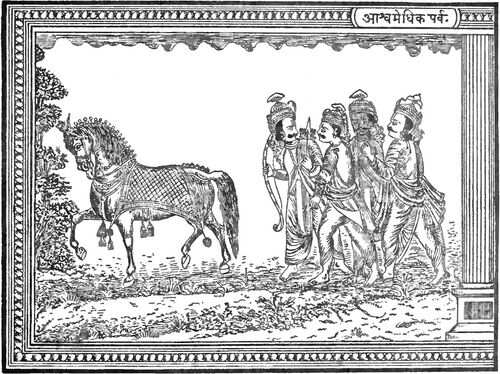
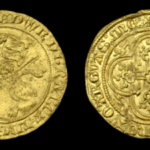
Depiction of the Ashvamedha in History of India (1906) (Source: Wikimedia Commons)
The ritual features prominently in both Indian epics: the Ramayana and the Mahabharata. In recorded history, Samudragupta also performed the ritual and commemorated it with gold coins. If the horse ritual was meant to cement a kingdom’s boundaries, in Manchester United’s case, its woes can be traced back to a stud named Rock of Gibraltar: the rock upon which modern Manchester United’s church was desecrated.Much like the sovereignty of Gibraltar has sullied Anglo-Spanish relations, Rock of Gibraltar’s ownership became a major bone of contention between Irish businessman John Magnier and his friend Sir Alex Ferguson.As Jonathan Wilson noted in his fantastic piece in The Guardian, the unravelling began in the year of the Treble, when Mull of Kintyre, owned by Magnier, won the prestigious Gimcrack Stakes at York, which entailed giving a speech at the annual Gimcrack Dinner. Not wanting to replicate the plot of The King’s Speech, Magnier asked his friend Sir Alex Ferguson to speak in his stead. But the racing establishment refused, saying only the horse’s owner would be allowed to show off said oratory.So Magnier made Ferguson the owner of another horse, Juniper (which also lost), and then Rock of Gibraltar, which won the race in 2001 and allowed Ferguson to give a speech.Like Manchester United in the nineties and noughties, Rock of Gibraltar turned out to be an extraordinarily successful racehorse, winning seven consecutive Group One races. His potential value as a breeding stallion skyrocketed, and Ferguson believed he was owed 50% of the horse’s future stud fees.An acrimonious legal battle followed with Magnier, and the club became entangled as well, with Magnier and his associate JP McManus selling their shares to one Malcolm Glazer in 2005, helping the Glazer family take Manchester United from a PLC to a private company.Now, speaking against Ferguson is the closest one can come in United’s religious order to blasphemy, and the only one brave enough to voice his dissent was the fallen Red Devil Roy Keane, who famously lashed out at Ferguson after his MUTV interview fallout and accused him of bringing his private life into the club with his argument with Magnier.
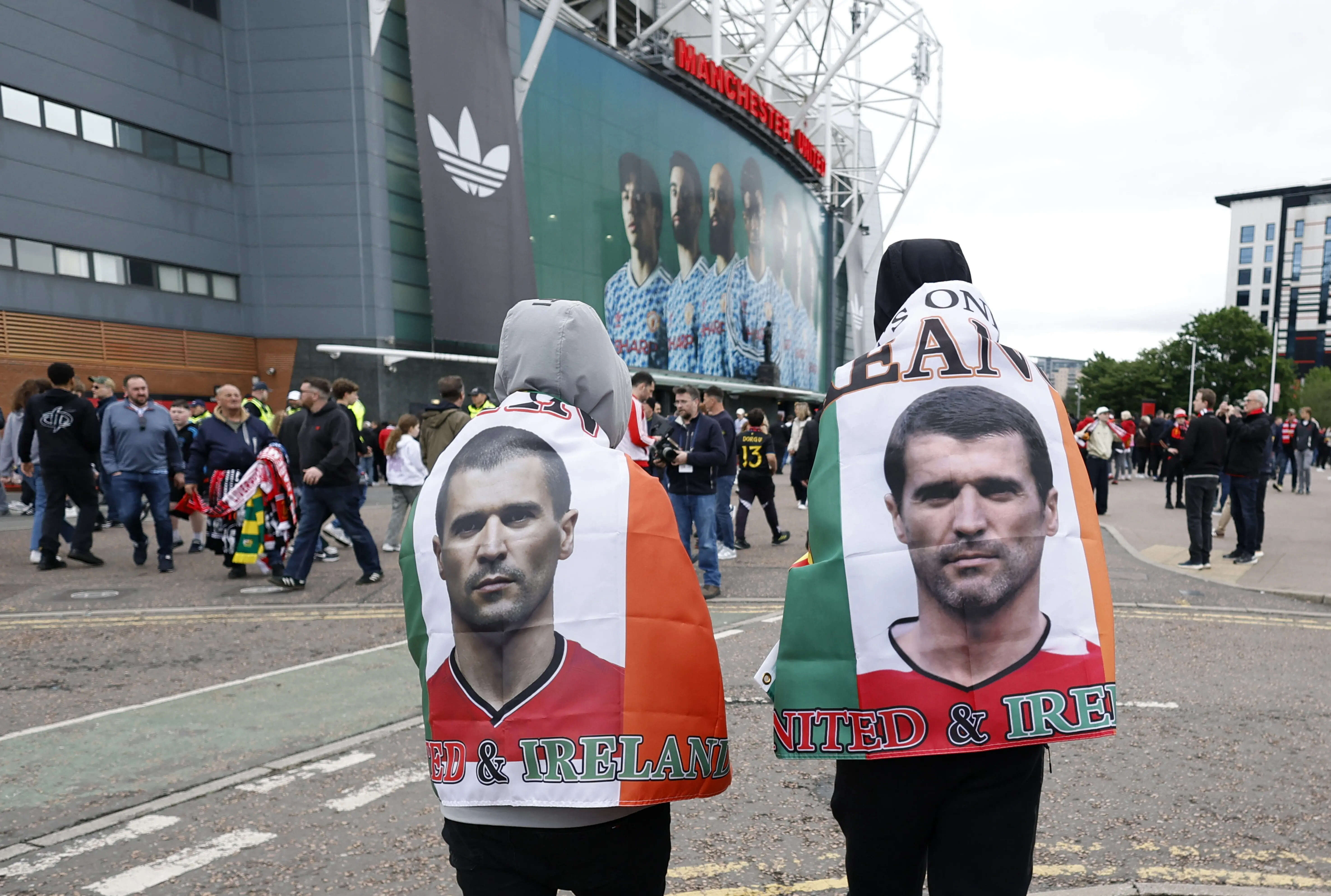
Soccer Football – Premier League – Manchester United v Liverpool – Old Trafford, Manchester, Britain – May 3, 2026 Manchester United fans with Irish flags featuring former player Roy Keane outside the stadium before the match Action Images via Reuters/Jason Cairnduff EDITORIAL USE ONLY. NO USE WITH UNAUTHORIZED AUDIO, VIDEO, DATA, FIXTURE LISTS, CLUB/LEAGUE LOGOS OR ‘LIVE’ SERVICES. ONLINE IN-MATCH USE LIMITED TO 120 IMAGES, NO VIDEO EMULATION. NO USE IN BETTING, GAMES OR SINGLE CLUB/LEAGUE/PLAYER PUBLICATIONS. PLEASE CONTACT YOUR ACCOUNT REPRESENTATIVE FOR FURTHER DETAILS..
Football finance expert Kieran Maguire once said during an interview with Goal: “I think if that particular discussion over the horse had never taken place, we could be watching a very different Manchester United today. If that relationship had remained amicable, then Manchester United might not have been sold.”But what’s done was done.During his tenure, Ferguson continued to defend the Glazers while racking up league wins and a Champions League, but the dark cloud of debt had already cast a pall over Old Trafford, and the dam broke the moment he retired.Now, if one is a fiscal dunce like yours truly, here’s a simple explainer of how the Glazers saddled United with debt.Malcolm Glazer bought Manchester United for approximately £790 million in 2005, but instead of paying for the club from his own pocket, he borrowed heavily and transferred the debt back onto the club.In financial parlance, it’s called a leveraged buyout. Football fans called it daylight robbery.From being virtually debt-free, United were suddenly £604 million in debt. Despite being the world’s most marketable club, those funds kept disappearing into the black hole to service the Glazers’ debt.A BBC Verify investigation found that approximately £1.19 billion left Manchester United between 2005 and 2024 in debt interest, debt repayments, dividends and fees associated with the takeover. Of that, £815 million went towards interest alone.To put that number in context, between 2009-10 and 2017-18, City, whose owners were coming up with imaginative ways of financial doping instead of suckling the club dry, had created an inflated revenue of £900 million.Ferguson’s managerial genius – which had transformed a relegation-hit club into modern football’s serial winners – continued to ensure no one needed to closely examine the increasingly fragile and mendacious edifice upon which Man Utd was built.Perhaps the problem lay with Ferguson himself, who essentially ran the entire club like a Sunday league team by doing a Kamal Haasan and playing every role himself.He wasn’t just the manager, but also chief strategist, final authority on recruitment and the institution’s footballing conscience.Once he was gone, the Glazers’ greatest sin became apparent, so much so that the managerial merry-go-round of the Abramovich era at Chelsea looked like an institution committed to long-term employment.The man handpicked by Ferguson, the Chosen One, David Moyes, quickly looked out of his depth before United tried every different managerial archetype.The man who was once congratulated on “inventing” modern football, Louis van Gaal, followed, and he came up short.Barcelona’s fallen angel José Mourinho, who almost succeeded Ferguson but chose to return to his beloved Chelsea after the fractious time at Real Madrid, failed to live up to his billing of a promised league title before his signature third-season meltdown.Ole Gunnar Solskjaer did give fans some nostalgic moments when the football was almost as good as the Fergie era before he was burdened with signings like Cristiano Ronaldo that upset the applecart.Erik ten Hag arrived as the next Dutch genius before Ruben Amorim’s 3-4-3 became synonymous with modern male suffering.Michael Carrick is only the latest manager to be handed the poisoned chalice, and it was quite clear that the fans didn’t blame him after the team lost 0-3 to a resurgent Bournemouth, which had just put Amorim’s AC Milan to the sword.After the game, the fans chanted “Sell United and f*** off home” before singing Michael Carrick’s song, just to make it clear who they blamed for United’s fortunes.Since Ferguson left, it has become evident that there is no rhyme or reason to hiring, with each manager putting together a smorgasbord of big-name footballers who would then be left behind like expensive vestigial organs for the next manager.United spent fortunes on Paul Pogba, Romelu Lukaku, Jadon Sancho, Antony, Harry Maguire and a succession of other footballers without developing anything resembling a coherent recruitment strategy.The problem was institutional rather than merely financial. The club had enough money to spend extravagantly, but its decision-making was so dysfunctional that extravagance became another form of self-harm.And this becomes particularly galling when one considers where Manchester United once stood in the financial hierarchy of European football.Before the Glazers darkened United’s door, United had topped Deloitte’s Football Money League for eight consecutive seasons. In 2026, they had fallen to eighth.Real Madrid were generating approximately €1.16 billion, Barcelona €975 million and Bayern Munich €861 million, while United managed €793 million. Liverpool had also overtaken them, becoming the highest-earning English club.The comparison with Madrid is instructive because it is perhaps the only club that has a global fanbase to match United’s. The club is owned by members who elect the club’s president. Florentino Pérez might behave like a European emperor collecting Galácticos the way Caesars collected gladiators, but he’s accountable to a membership structure, and the club’s profits are reinvested rather than distributed to private shareholders.Real Madrid have borrowed heavily to renovate the Santiago Bernabéu, but the crucial difference is what the debt finances. Madrid’s borrowing has helped transform their stadium into a commercial powerhouse, generating revenue from football, hospitality and other events. By 2025-26, Madrid reported annual revenue of €1.22 billion, with stadium revenues more than doubling compared with the period before redevelopment.United’s debt, by contrast, helped finance the purchase of United.Bayern Munich offer another example.Under Germany’s 50+1 system, the members’ association retains control, owning 75% of Bayern’s football company, while Adidas, Audi and Allianz own the remainder.And then there is Liverpool, whose American owners, Fenway Sports Group, have managed to achieve something the Glazers apparently considered impossible: owning a Premier League football club without making every major decision an expensive exercise in institutional masochism.Meanwhile, the club’s once-vaunted infrastructure was in ruins.Cristiano Ronaldo was horrified by the gym facilities.Robbie Savage savaged them as being on par with a League One team.And Zlatan was aghast at the club’s “small mentality” when he was docked one quid from his wage packet because he dared raid the minibar at a hotel for a bottle of juice.Old Trafford became a living monument to the Glazers’ greed. While Real Madrid rebuilt the Bernabéu and Tottenham constructed an enormous modern stadium, United’s stadium became known for being as leaky as its defence.And then appeared some light at the end of the horizon: Jim Ratcliffe, one of the UK’s richest men, acquired 29.4% from the Glazers and ostensibly took charge of its footballing operations.United acquired another layer of management, and soon we got a glimpse of what increased corporatisation does to a footballing institution.Dan Ashworth was brought in as sporting director and then let go five months later, which cost the club a pretty £4.1 million, excluding his wages.Huge amounts were also spent on golden handshakes for Erik ten Hag and Ruben Amorim.He also started the practice of getting executives from the blue half of Manchester, including Omar Berrada as chief executive, Jason Wilcox as director of football, Sam Erith as head of performance, Toby Craig as communications chief and Stephen Torpey to run the academy, leading Nicky Butt to complain: “Every City staff member goes to Man Utd now.” He pointed out that Real Madrid would hardly attempt the same experiment with Barcelona.And many of them were operating at City at a time when the club engaged in systemic financial doping, using sham commercial arrangements to inflate revenues and understate costs.And those who bore the brunt of Ratcliffe’s financial tightening – which perhaps explains his disdain for migrants – were United’s staff, as he scrapped free lunches, reduced benefits, increased ticket pricing and also scaled back support for the Manchester United Foundation. And he also nixed Ferguson’s role as Global Ambassador.But perhaps Ratcliffe’s starkest failure was the player recruitment, or lack thereof, this season.
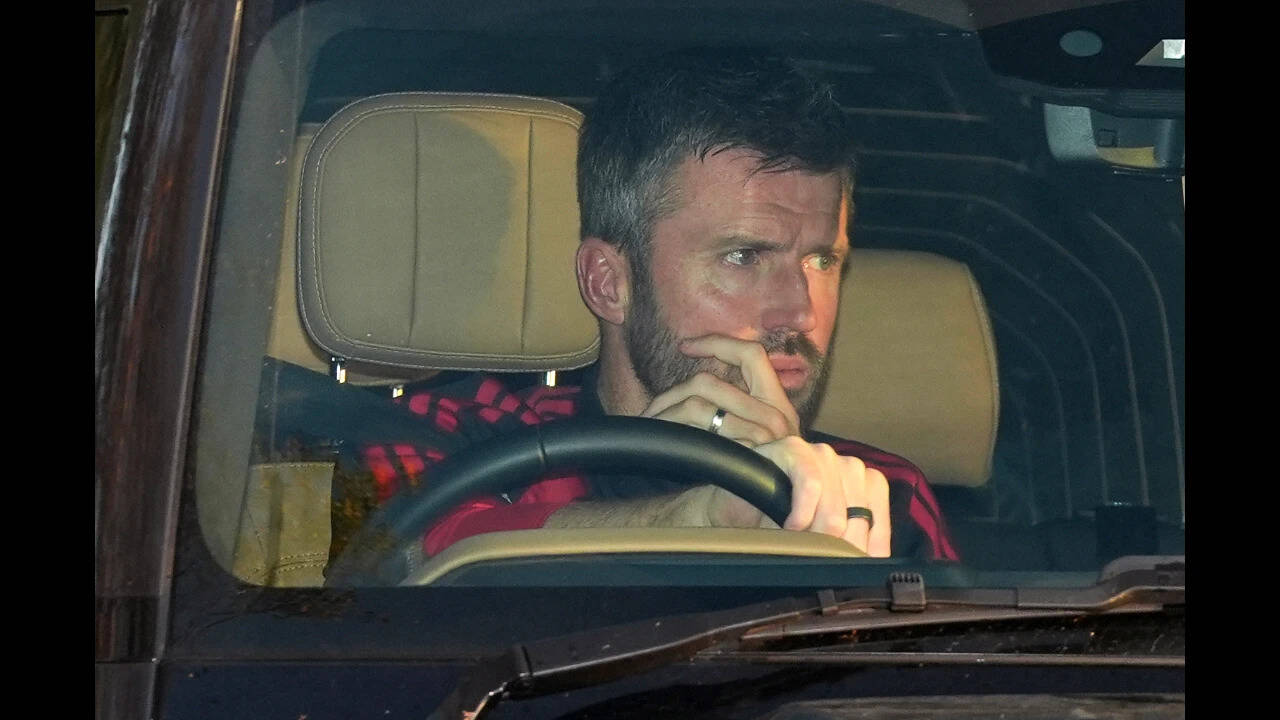
Manchester United soccer team manager Michael Carrick arrives at the team’s training center in Manchester, England, Tuesday Oct. 27, 2026. (Annabel Lee-Ellis/PA via AP)
After exorcising Ruben Amorim’s 3-4-3, interim first-team manager Carrick got Manchester United playing out of their skin to reach third in the league, picking up more points than any other manager this season. He did it with a style of counter-attacking football and by getting the best out of his team, but it was obvious that would fail the second-season test.United needed reinforcements, more so because of the added pressure of Champions League games.The club failed to sign a left-back despite Luke Shaw’s history of spending time in the treatment room, didn’t get a proper centre-forward, leaving Benjamin Šeško as the most recognisable out-and-out striker, and were outspent by newly promoted teams, leaving Carrick to wonder where the added funds from qualifying for Europe went.Alas, it’s one in a long line of questions that everyone associated with the red half of Manchester has about how United will get out of its post-Fergie funk, with no clear answers.In Poor Richard’s Almanack, Benjamin Franklin wrote in 1758: “For want of a nail the shoe was lost; for want of a shoe the horse was lost; and for want of a horse the rider was lost, being overtaken and slain by the enemy, all for want of care about a horse-shoe nail.”And we can now add a Fergie post-script: “And for the want of a horse, a club was lost.”A dog saved Manchester United many years ago. A horse might be the reason it was lost.Also Read | Previous editions of OFFSIDE1. Sir Alex Ferguson’s new book ‘Games of My Life’ is a cruel time machine for Man Utd fans2. Why Sir Alex Ferguson vs Pep Guardiola is no longer a debate3. Manchester United’s ‘Ship of Theseus’ rebuild has a Hull issue4. What Man City’s ‘guilty’ verdict means for the Premier League and the UK government5. Football’s original sin: Has the offside rule become too complicated for its own good?