









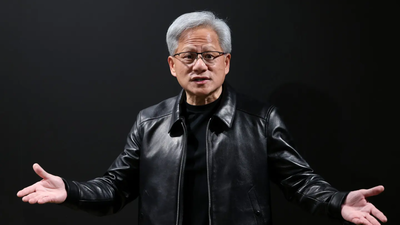
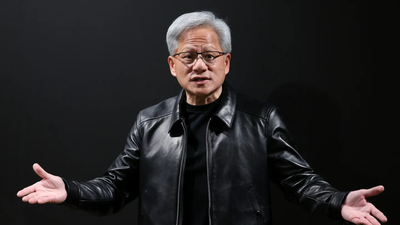
Nvidia CEO Jensen Huang has said that export curbs and trade restrictions imposed by Washington have served as a ‘catalyst’ for China’s rapid progress in semiconductor development. Speaking to CNBC on the sidelines of Nvidia’s GTC Berlin conference, Huang stated that American regulatory measures effectively pushed China to speed up its own domestic chip manufacturing and strive for technological self-reliance. The top executive also dismissed concerns over a memory chip glut, saying that a supply surplus is unlikely to materialise by 2029.
US export curbs on China
Current US trade rules prohibit the export of advanced processors to China, including Nvidia’s high-end artificial intelligence (AI) GPUs. Despite these barriers, reports have claimed, several Chinese entities have managed to access that computing power through third-party data centers based in Southeast Asia. Industry experts consider this access crucial to the growing capabilities of Chinese-developed AI models.“We’ve definitely accelerated China’s initiatives, its nationalization of semiconductor manufacturing capabilities, and all of the industrial support that has been put into that sector, and so there’s no question we’ve accelerated that,” Huang said.
‘American technology well prepared’
Even with intensified competition and China’s accelerated domestic initiatives, the Nvidia chief expressed strong confidence in the standing of US technology companies. Huang stated that American tech firms remain “mighty” and are well-prepared to take on competitive pressure “from anybody.”
‘Companies can always use more RAM’
Rejecting concerns that memory chips will be supply surplus, Huang implied that the ongoing hardware supercycle is not nearing any abrupt end.“One of the things that’s really great about memory is that you can always use more of it,” Huang said,underscoring that High Bandwidth Memory (HBM), which is a specialised form of RAM critical for Al acceleration, will continue to see widespread use for years to come.“We’re the first company in the world to put LPDDR memory – what goes into your cell phones – into the world’s data centers, and it’s enabled us to deliver performance that’s twice as energy efficient as anything in the world today, and so we’re going to continue to use abundant amounts of them as well,” he said.