









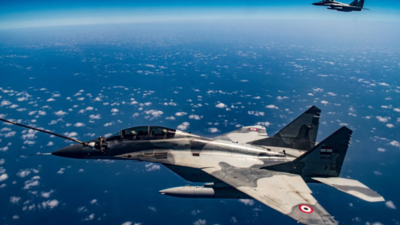
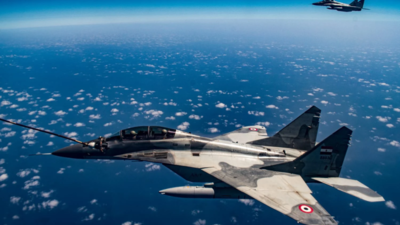
Egypt is weighing military support for Saudi Arabia against Yemen’s Houthis, a move that could bring one of the Middle East’s largest militaries into the escalating conflict, with implications for Red Sea security, the Suez Canal and the balance of power in the Arabian Peninsula. According to reports, President Abdel Fattah el-Sisi has sought parliamentary authorisation to provide military assistance to Riyadh if requested, and parliament has postponed its vote to October 26 amid questions about the mission’s objectives, duration and cost. Sisi has described the role as defensive, and the proposal does not mean Egypt has decided to send ground troops into Yemen. Foreign Minister Badr Abdelatty said on October 13 that Egypt would respond to whatever Saudi Arabia asks of it, and that Cairo was seriously considering joining the Mecca Joint Defence Agreement.Egypt’s interest goes beyond its ties with Riyadh. The Red Sea links the Suez Canal to the Gulf of Aden and the Indian Ocean through the Bab el-Mandeb Strait, and Houthi attacks on commercial vessels since November 2023 pushed shipping companies to go around the Cape of Good Hope. According to Associated Press reporting, canal revenue fell from a record $10.25 billion in 2023 to $3.991 billion in 2024. Saudi Arabia is also an important economic partner for Egypt through investment, financial support and jobs for Egyptian workers in the Gulf.History is a caution. Egypt intervened in Yemen in 1962 after army officers overthrew the monarchy, with President Gamal Abdel Nasser backing the republicans while Saudi Arabia supported the royalists. A limited deployment grew to around 50,000 troops within a year and about 70,000 by the summer of 1965, according to a study published by Cambridge University Press. Egyptian forces faced mountain terrain, tribal resistance and outside support for their opponents, and the campaign ended in 1967 after the defeat in the Six-Day War. Some assessments put Egyptian military deaths at about 26,000. Egypt later joined the Saudi-led coalition in March 2015 with naval and air forces, a far more limited role.Egypt has capabilities that could help. Its air force flies Rafale, F-16 and MiG-29M/M2 fighters and E-2C Hawkeye early-warning aircraft, which could support patrols, surveillance and detection of incoming threats. Its air defences include the S-300VM, Buk, Tor and Hawk systems, though nothing shows Cairo will transfer them, as it must also defend its own territory. The navy has frigates, corvettes, missile boats, submarines and Mistral-class helicopter carriers, and could escort merchant ships and monitor traffic in the Red Sea. Logistics and intelligence sharing are other possible contributions.The Houthis, formally Ansar Allah, are a different kind of opponent. They have ballistic and cruise missiles, one-way attack drones and reconnaissance drones, and they use mobile launchers and dispersal that make detection hard. Defending against them takes surveillance, early warning, communications and enough interceptors, and cheap drones can force defenders to spend costly missiles. Air defence help and naval patrols could strengthen the coalition, but they would not remove the Houthis’ ability to attack or settle Yemen’s internal divisions.The main questions are whether parliament approves, which assets are sent, and whether operations stay within Saudi territory and sea approaches or reach into Yemen. Cost, duration and command arrangements will also matter, and the 1960s campaign is the reference point.