





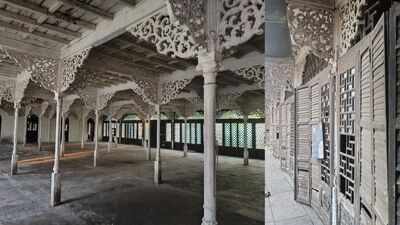
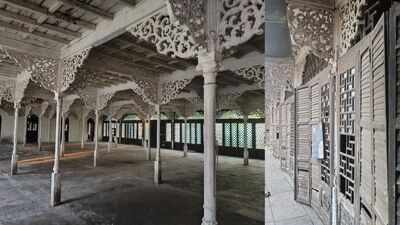
BHOPAL: A palace of splendour that once beat weather’s whims and could host everyone, from Viceroy Lord Minto to Gandhi, now lies nearly desolate and abandoned. But ‘Benazeer’ is a Persian word meaning incomparable or matchless. The palace was built in 1877 to live up to that name.The structure served as the summer rest-house of Shahjahan Begum, Bhopal’s ruler. Benazeer Palace sits beside Taj-ul-Masajid and overlooks Motia Talab, one of the cascading lakes built to harvest run-off rainwater from Idgah hills. Benazeer brought together Belgian glass, cast iron, red stone, steel and water engineering in one building.
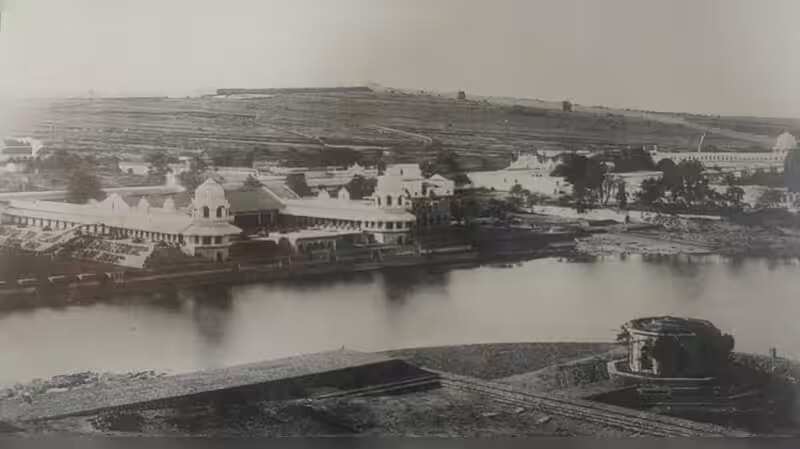
There was a proposal to transform it into a heritage hotel, though progress remains uncertain.
A cool marvelBenazeer faces Motia Talab and breathes with it. Cold air from the lake was drawn through ventilators, ducts and jharokhas and pushed inside like a natural blower, a technique common in old Bhopal before coolers or ACs became the norm. It was a palace that cooled itself and its inhabitants.The palace was designed for smell, sound and temperature as much as sight. Its Itr-Daan was the perfume chamber, where attars were stored and released through channels so that fragrances spread across the halls. Next to it was the hammam, with hot and cold water systems, and Sawan-Bhadon, a monsoon-mimicking structure built to recreate the sound of rain and coolness even in peak summer. Floor slopes were calibrated to make water sing as it moved, and fountains ran on natural contouring without electricity.TOI visited the palace grounds and found that despite many columns, the halls feel open and cross-ventilated. The stone slabs remain largely intact, while the cast iron and lime plaster work is among the finest that survives.A parched search for a MosqueHeritage expert and architect S M Husain traces Motia Talab to the making of Taj-ul-Masajid. Begum Shahjehan first wanted to build the mosque on Idgah hill after seeing it from her garden. When water was not found there, the site was shifted down. Even then water did not come despite digging many wells. Engineers then suggested building a dam from the earth taken out of the wells. That dam became Motia Talab.Breaking new ground in olden timesNext to Benazeer is Bab-e-Ali ground. According to Husain, it was earlier called Paai Bagh, Paai meaning feet, and was built as India’s first ladies’ garden, gym and club with pathways lined with flowers of every season. It was made so women confined inside houses could step out and have their own spaces.Benazeer Palace later served as the royal guest house. Viceroy Lord and Lady Minto stayed here in 1909, and in 1929, Mahatma Gandhi gave a call to people to join the freedom movement from its ground.
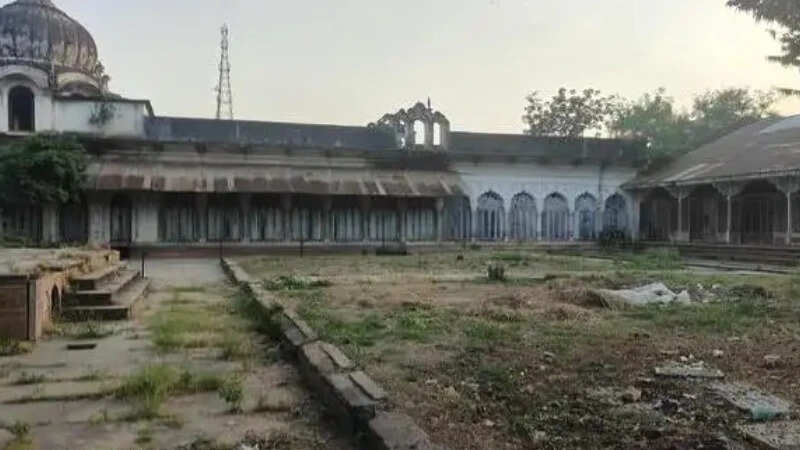
Despite undergoing restoration, it has not been effectively utilized and faces deterioration today.
The palace’s recent fateAbout 10 years ago, a fire gutted much of Benazeer’s woodwork, including parts of the perfume room and upper pavilions.Vijay Kumar Amar, retired chief engineer of MP Public Works Department (PWD), said Benazeer Palace underwent restoration in the mid-1990s. Tourism Department carried out further upgrading around 2000, but the historic property has remained underutilised despite its heritage significance. Amar, who was involved in the restoration work, said the palace had considerable potential for reuse. A proposal to develop it as a heritage hotel was floated in 2020, though its current status remains unclear.Today, the gates are rusting, the plaster has fallen and the floor is covered in debris. A lone caretaker clears grass and garbage daily. Inside are only cats, dogs and snakes and traces of an occasional film shoot.