







JAISALMER: For generations of troops guarding India’s western frontier, Tanot Mata is more than a deity. Revered as the ‘Goddess of Bombs’, the presiding deity of the Tanot Mata Temple near the India-Pakistan border in Rajasthan’s Jaisalmer district holds a special place in the faith of security personnel, rooted in accounts of unexploded bombs during the 1965 and 1971 India-Pakistan wars.The temple’s enduring association with these wartime accounts has made it a place of deep devotion for soldiers and civilians alike. Now, as Navratri begins, thousands of devotees are making their way to the shrine to seek the blessings of Tanot Mata.Located around 120km from Jaisalmer, the Tanot Mata Temple in Tanot village is popularly known as Bamo Wali Devi, or the ‘Goddess of Bombs’. Its religious significance remains closely intertwined with the military history of the border region and the faith of those who guard it.More than 20,000 devotees from across the country visited the 1,200-year-old temple on Sunday, the first day of the 10-day Navratri fair, which began with the traditional Ghatasthapana ceremony.According to popular accounts, hundreds of bombs fired by Pakistani forces during the 1965 and 1971 wars fell in the temple area but did not explode within its premises.The accounts strengthened the faith of local residents and security personnel in the deity. Following the 1965 war, Army and Border Security Force (BSF) personnel developed a special reverence for the temple and contributed to its development.
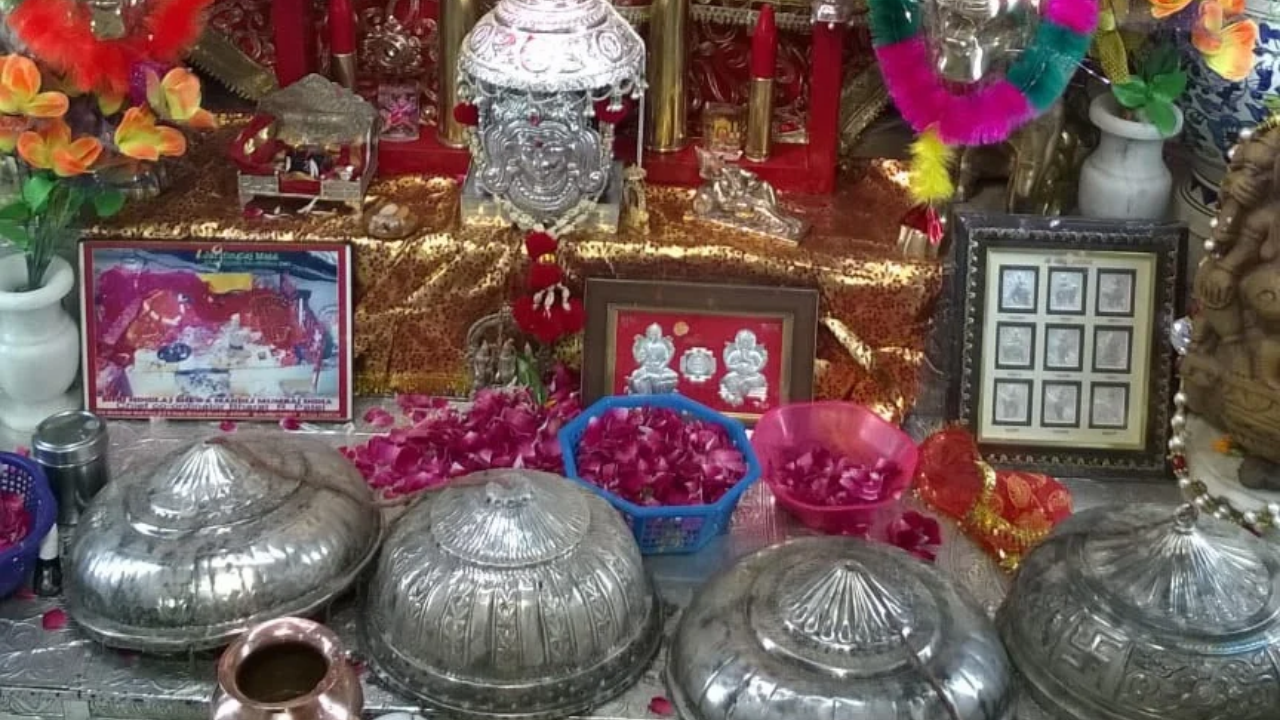
After the 1971 war, a Pakistani Brigadier, humbled by the miracles attributed to the Goddess, sent five silver canopies to the temple as an offering.
The shrine has remained a symbol of faith for personnel posted in the border region. Devotees have also linked the temple’s protective legacy to Operation Sindoor, believing that Tanot Mata’s blessings were behind the failure of drones that reportedly crossed into Indian territory from Pakistan to cause damage in Jaisalmer. Such interpretations reflect the religious beliefs associated with the shrine.
Traditional rituals mark Navratri opening
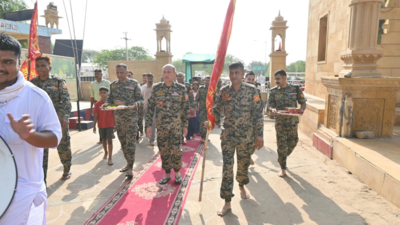
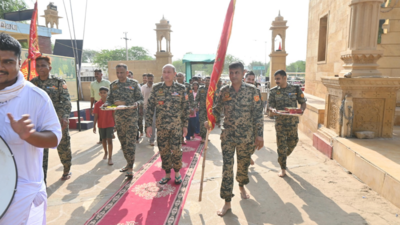
The 10-day fair began with the installation of the sacred Kalash amid drumbeats and traditional rituals. A grand procession was taken out to the temple, followed by a havan and yajna on the temple premises. BSF officers and personnel participated in the rituals and offered oblations.The ceremony was attended by Linzkai Sitalu, Commandant of the BSF’s 26th Battalion; Second-in-Command Madan Goyal; Deepankar Sharma; Deputy Commandants Anmol Bhagat and Sushil Kumar; and other BSF officers and personnel.Three aartis were performed on the opening day, and the same schedule will continue throughout Navratri. A community kitchen is serving prasad to devotees from morning till evening.
BSF steps up arrangements for pilgrims
Given the temple’s location in a sensitive border region and the large number of visitors expected during the festival, the BSF has strengthened arrangements for devotees’ darshan, food, medical assistance and other essential facilities.Under the guidance of the Inspector General of the BSF Rajasthan Frontier and the direction of Jitendra Singh Binji, Deputy Inspector General of the BSF’s North Sector, the 26th Battalion has made arrangements to facilitate the pilgrimage. A medical camp has been established, and police personnel have been deployed alongside BSF troops.
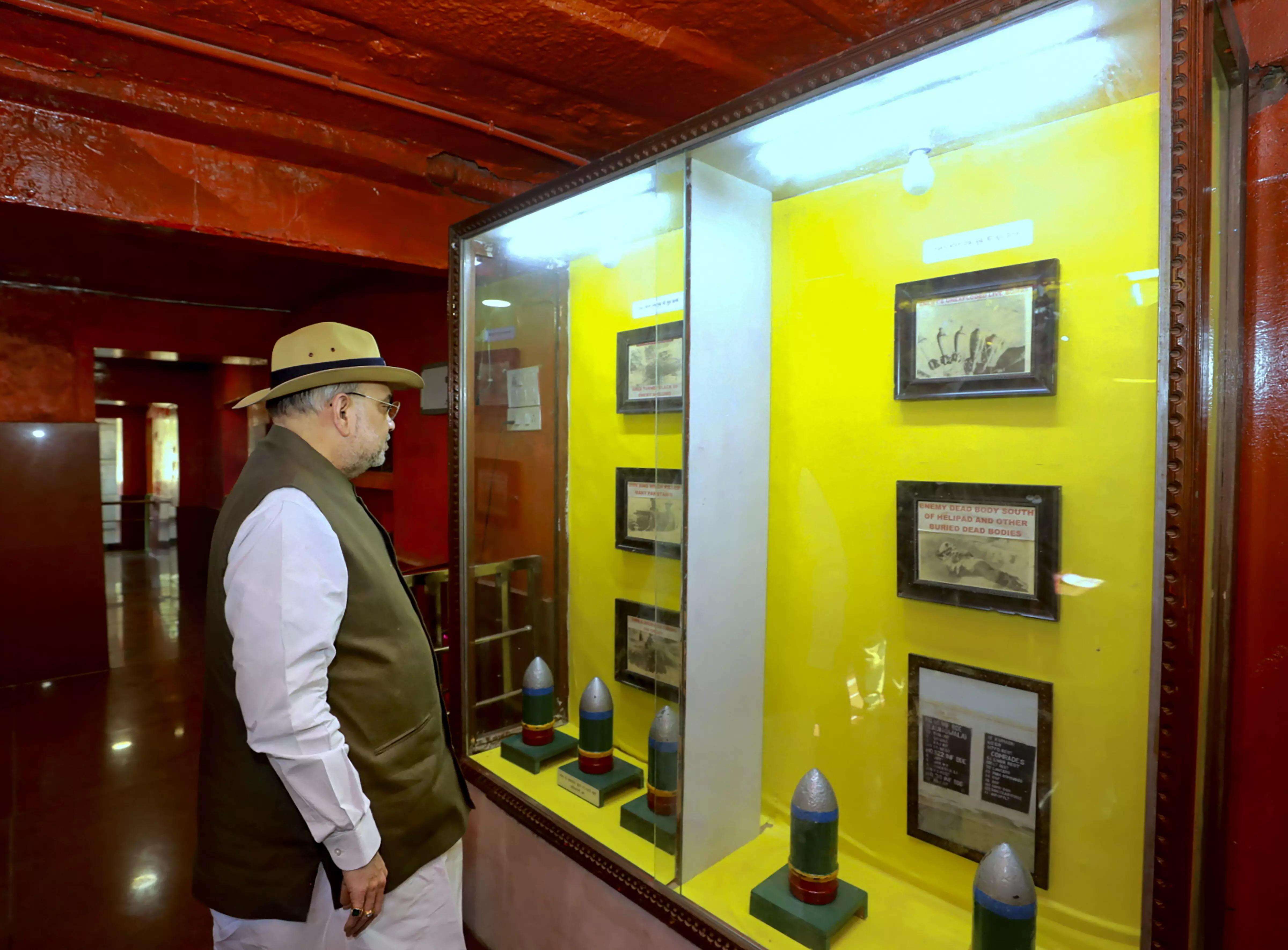
Home minister Amit Shah inspects an exhibit of bombs dropped by Pakistan at Tanot Mata temple. (File Photo)
The temple has been decorated and illuminated for Navratri. A large LCD screen has been installed outside the premises so that devotees can watch the deity’s darshan and aarti during periods of heavy crowding.BSF personnel also serve as priests and oversee the temple’s upkeep and arrangements for pilgrims. Officials said the shrine’s growing popularity was evident from the number of devotees undertaking the journey on foot. Temporary shops have also been set up around the temple to cater to visitors.Meanwhile, Ghatasthapana was also performed at Ghantiyali Mata Temple, where devotees participated in havan rituals. Arrangements at religious sites across the region are being strengthened to accommodate the growing number of visitors during Navratri.