








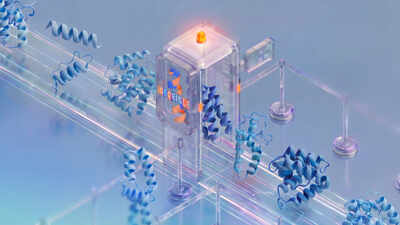
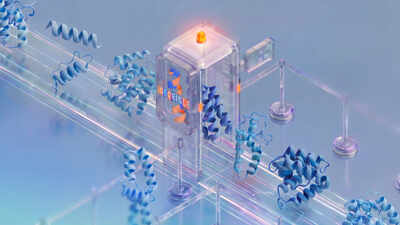
Google DeepMind, Google’s AI lab, recently introduced a technology called SynthID Bio that essentially puts a hidden watermark on proteins designed by artificial intelligence (AI). The main motive of this is that anyone can later check where a design came from, serving as a key security measure in strengthening biosecurity. Moreover, this tech will also serve a way to mitigate the risk of mislabeled synthetic 3D structures polluting public databases and misleading downstream research. The key point is that the watermark doesn’t get in the way of how the protein works.Sarah Carter, a biosecurity policy expert and Principal at Science Policy Consulting who reviewed the work, called it “an important piece of the puzzle for tracking the provenance of biological designs.” She said that by linking designs to the model developer, the watermarks “empower developers to lead on safety and allow synthesis providers to streamline screening for customers who have used those models.” SynthID Bio is currently available as a research release, with open-source code and data made accessible to the scientific community.
What is SynthID Bio Google DeepMind introduced
You may know watermarks from photos or documents, where a faint mark shows who made something. If you are an AI model user and follow news closely, tech companies have introduced watermarking AI-generated content with Google bringing its own version SynthID that serves as an invisible marker for photos, videos, audio and text created by AI. SynthID Bio does something similar for biology. It hides a signature inside AI-generated protein designs, including the written sequences and the predicted 3D shapes.The signature can’t be seen but it can be verified. It works on the digital model and it also works on the actual protein once it has been made in a lab. According to Google, in laboratory tests, the watermarked designs matched the performance and natural variety of designs without a watermark.
What is Biosecurity
According to Scientific Journal ScienceDirect, Biosecurity is a combination of practices and protocols designed to prevent the transmission of harmful biological agents, infectious diseases and invasive species like viruses and bacteria.The COVID-19 pandemic is one great example of biosecurity. As per an article on National Library of Medicine (National Center for Biotechnology Information), “the SARS-CoV-2 pandemic is a stark reminder of the devastation biological threats can cause.”The “global community saw a massive surge in the demand for diagnostic capacities, which had a substantial impact on biosafety and biosecurity. Laboratories had to cope with a surge in laboratory testing capacity, while resources and training possibilities were limited. In addition, the pandemic highlighted the impact biological threats can have, thereby giving rise to new dialogue about biosecurity and new biological threats.”The paper published in the Journal highlighted issues regarding biosafety and biosecurity during the pandemic, and recommended improvement in future biosafety and biosecurity to increase preparedness for the next global health crisis.This also answers the question, “Why this matters now?” AI is already helping scientists with some of biology’s hardest problems: it can predict the structure of proteins (AlphaFold) and design brand-new ones (AlphaProteo and ProteinMPNN). More recently it has been used to develop new bacteriophages, which are viruses that infect bacteria.But these tools also bring new risks, and DeepMind points to two:
- AI can create designs that slip past the usual checks used when DNA is ordered from a lab.
- 3D structures that are wrongly labelled as real can pollute public scientific databases and mislead the research that builds on them.
How SynthID Bio watermark works
SynthID Bio is not a single method. It is a family of methods, and each one is matched to the type of data being marked. For protein sequences, it gently steers which amino acids are chosen while for predicted 3D structures, it slightly adjusts the atomic coordinates.Together, these small changes create a reliable signal that can be detected later. In experiments, they did not damage the protein’s biological function, which matters if the proteins are going to be used to treat disease or support research.DeepMind compares biosecurity to a “Swiss cheese” defence. Every safeguard, such as model-level protections or vetting customers, has some gaps. Stack several together and each one covers the holes in the others. SynthID Bio adds another layer, built into the biological design itself.In the past, a DNA sequence that looked unfamiliar could safely be assumed to come from some undiscovered natural organism. That assumption no longer holds, because AI can create entirely new sequences that look nothing like known hazards. Checking that an unfamiliar order isn’t an engineered threat takes lengthy manual reviews, which can hold up important research.This is where SynthID Bio can help. It gives screeners an automated signal showing that an order came from a trusted model with built-in safeguards.